The Advanced Lifter's Guide to Smashing Your Bench Press Plateau
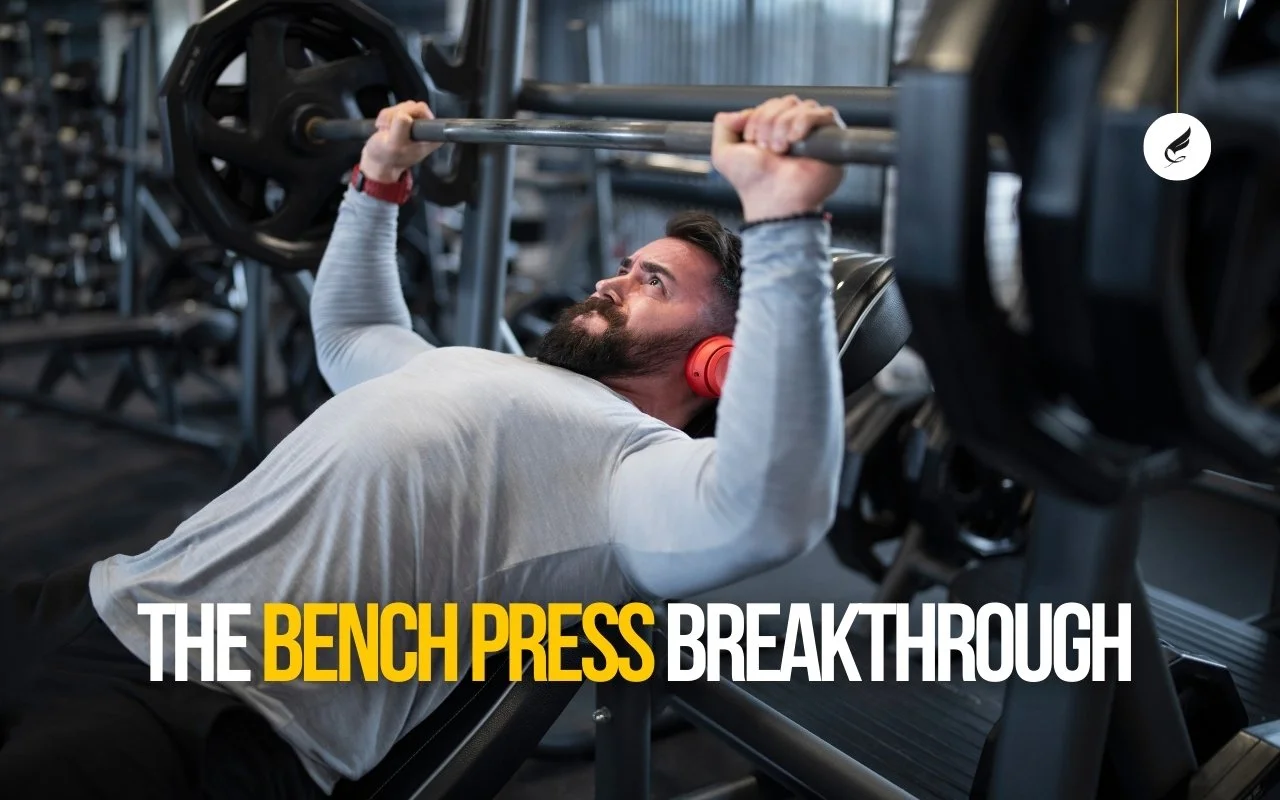
For any serious lifter, it is one of the most frustrating experiences in the weight room. For several weeks, or even months, your bench press has been stuck. The weight on the bar simply refuses to go up, no matter how hard you push. You've officially hit a bench press plateau.
This isn't just a sign of a bad day; it's a signal that your current training program is no longer providing the stimulus your body needs to adapt. Simply trying to "train harder" is not the answer and is often a fast track to injury or burnout.
Breaking through a bench plateau requires a more intelligent, surgical approach. It requires you to diagnose the root cause for the stall and apply a specific solution. This guide is for the advanced lifter who is ready to stop being frustrated and make progress again.
Smashing a plateau requires smart programming. These strategies should be implemented within a well-structured, long-term plan. To understand the bigger picture, we highly recommend reading our foundational guide: What is Periodization? The Secret to Long-Term Muscle Gain.

Step 1: Diagnose Your Sticking Point
Your bench press is a chain, and it's only as strong as its weakest link. The first step is to identify where in the range of motion you are failing the lift. This is your sticking point.
Failing Off the Chest: If you struggle to get the bar moving right at the bottom, this often indicates a weakness in your pectoral muscles (chest) or a lack of explosive power from your prime movers.
Failing at the Mid-Point: If the bar gets stuck halfway up, this is a classic sign of weakness in your anterior deltoids (front shoulders).
Failing at Lockout: If you struggle to finish the final few inches of the lift, this points to a weakness in your triceps, which are crucial for the final push.

Step 2: Apply the Solution - A Toolkit for Smashing Plateaus
Once you've identified your weak point, you can apply a specific set of tools to fix it.
Tool 1: Technique Refinement (The Foundation) Many experienced lifters develop small flaws in their proper form. A plateau is the perfect time for a technical audit.
Master Your Setup: Create a stable base. Plant your feet firmly, drive your traps and upper back into the bench, and create a slight but strong big arch. This setup allows you to transfer force more efficiently from your lower body through the bar.
Control the Eccentric: Don't just let the bar drop. A controlled 2-3 second descent builds stability and strength in the exact path the bar needs to travel.
Tool 2: Strategic Accessory Movements Your bench progress is supported by smaller muscles. Strengthening them is often the fastest way to increase your main lift.
If You're Weak Off the Chest:
Pause Bench Press: Pause the bar for a 2-3 second count on your chest. This eliminates momentum and builds raw power.
Dumbbell Bench Press: The increased range of motion and stability demands are excellent for building pectoral muscle size.
If You're Weak at Lockout:
Close-Grip Bench Press: This variation places a much greater emphasis on the triceps.
Board Press or Floor Press: These shorten the range of motion, allowing you to overload the top portionof the lift with heavy weights.
Heavy Dips and Skullcrushers: Fantastic accessory movements for building triceps muscle mass.
Tool 3: Smart Programming Adjustments Your body has adapted to your same workout. You need to introduce a new stimulus through progressive overload.
Incorporate RPE/RIR: Stop training to failure on every set. The massive fatigue is likely hindering your recovery. Most of your work should be in the RPE 7-9 range.
Manipulate Volume and Intensity: If you've been doing high volume, bodybuilding-style training (3x10), switch to a strength-focused block with low reps and heavier weights (5x5). If you've been doing low-rep strength work, a block of higher-rep hypertrophy work can build the muscle mass needed to support future strength gains.
Don't Neglect Other Factors: Are you getting enough sleep? Is your poor nutrition holding you back? All the factors matter for long-term progress.
For a deep dive into these crucial concepts, read our guides on Training to Failure and Your Guide to RPE and RIR.
Conclusion: A Smarter Path to a Stronger Bench
A bench press plateau is not a wall; it's a puzzle. By taking an analytical and intelligent approach—diagnosing your sticking point, refining your technique, and making smart adjustments to your training program—you can systematically solve that puzzle. Stop throwing yourself against the same wall. Take a step back, implement these strategies, and get ready to add weight to the bar.

Ready to Build Your Elite Strength Program?
Breaking through a plateau requires a personalized strategy. A generic online template won't analyze your specific weak points or account for individual factors like limb lengths. Let our expert coaches design a custom training plan that guarantees you smash your records and achieve the results you've been working for.