What is Periodization? The Secret to Long-Term Muscle Gain and Breaking Plateaus

Have you ever felt like you're stuck in a rut at the gym? You show up for your training sessions consistently, you push yourself hard, but the weight on the bar stops moving and your body stops changing. You've hit the dreaded training plateau.
For most people, the response is to simply push harder—more reps, more sets, more days in the gym. But this often leads to burnout, frustration, and even injury. The problem isn't a lack of effort; it's a lack of a strategic, long-term training plan.
The solution is a concept that has been the secret weapon of elite athletes and expert coaches for decades: Periodization.
This guide will break down what is periodization, why it's the most effective method for ensuring long-term progress, and how you can apply its principles to your own training.
What is Periodization? Moving Beyond Random Workouts
At its core, periodization training is the logical and systematic planning of your training variables over a specific period. Instead of doing random workouts or following the same routine for months on end, periodization organizes your training into distinct phases or "training cycles," each with a specific focus.
The primary purpose is to manage fatigue and optimize performance. By strategically manipulating variables like training volume (how much you lift in total), training intensity (how heavy you lift), and exercise selection, you can continually challenge your body in a way that allows for both stimulation and crucial recovery. This prevents overtraining and ensures you are always primed to make gains.
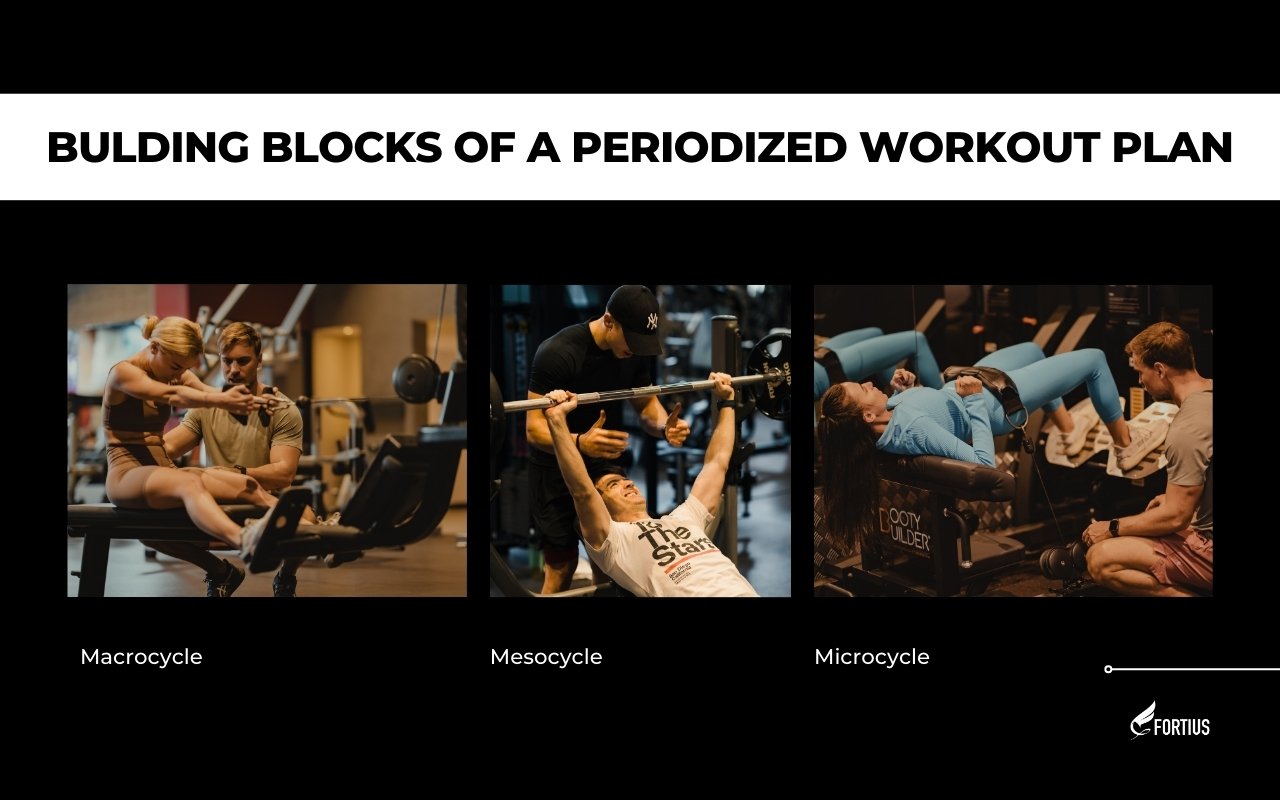
The Building Blocks of a Periodized Plan
A periodized program is typically broken down into three phases:
Macrocycle: This is your long-term training plan, usually lasting several months to a year. It represents your overarching training goals (e.g., "gain 5kg of muscle" or "prepare for a competition").
Mesocycle: This is a specific training block within your macrocycle, typically lasting 4-8 weeks. Each cycle has a distinct focus, such as a hypertrophy block (focused on muscle growth), a strength block (focused on lifting heavier load), or an endurance block.
Microcycle: This is your weekly training plan. It outlines the specific workouts, exercises, sets, and repetitions you will perform each day within your current mesocycle.

Types of Periodization: Linear vs. Undulating
There are two main models of periodization that are most common in strength training.
1. Linear Periodization (The Classic Model) This is the most straightforward approach. In this model, you progressin a "linear" fashion, starting with high volume and low intensity, and gradually moving towards low volume and high intensity. It's a time-tested method used for decades.
Example of a 12-Week Linear Plan:
Weeks 1-4 (Hypertrophy): High volume, moderate weight. (e.g., 3-4 sets of 10-15 reps)
Weeks 5-8 (Strength): Moderate volume, heavy weight. (e.g., 4-5 sets of 4-6 reps)
Weeks 9-12 (Peaking): Low volume, very heavy weight. (e.g., 3-5 sets of 1-3 reps)
2. Undulating Periodization (The Modern Approach) Also known as non-linear periodization, this model involves changing the training focus more frequently, often within the same week. This is often a more engaging and practical approach for the general population who have different goals than professional athletes.
Example of a Weekly Undulating Plan:
Monday (Strength Focus): Heavy compound lifts in the 4-6 rep range.
Wednesday (Hypertrophy Focus): Moderate weight lifts in the 10-15 rep range, including accessory work for a specific muscle group.
Friday (Endurance Focus): Lighter load, higher repetitions (15-20+), and shorter rest periods.
Learn more about our 12 Week Body Transformation Program.
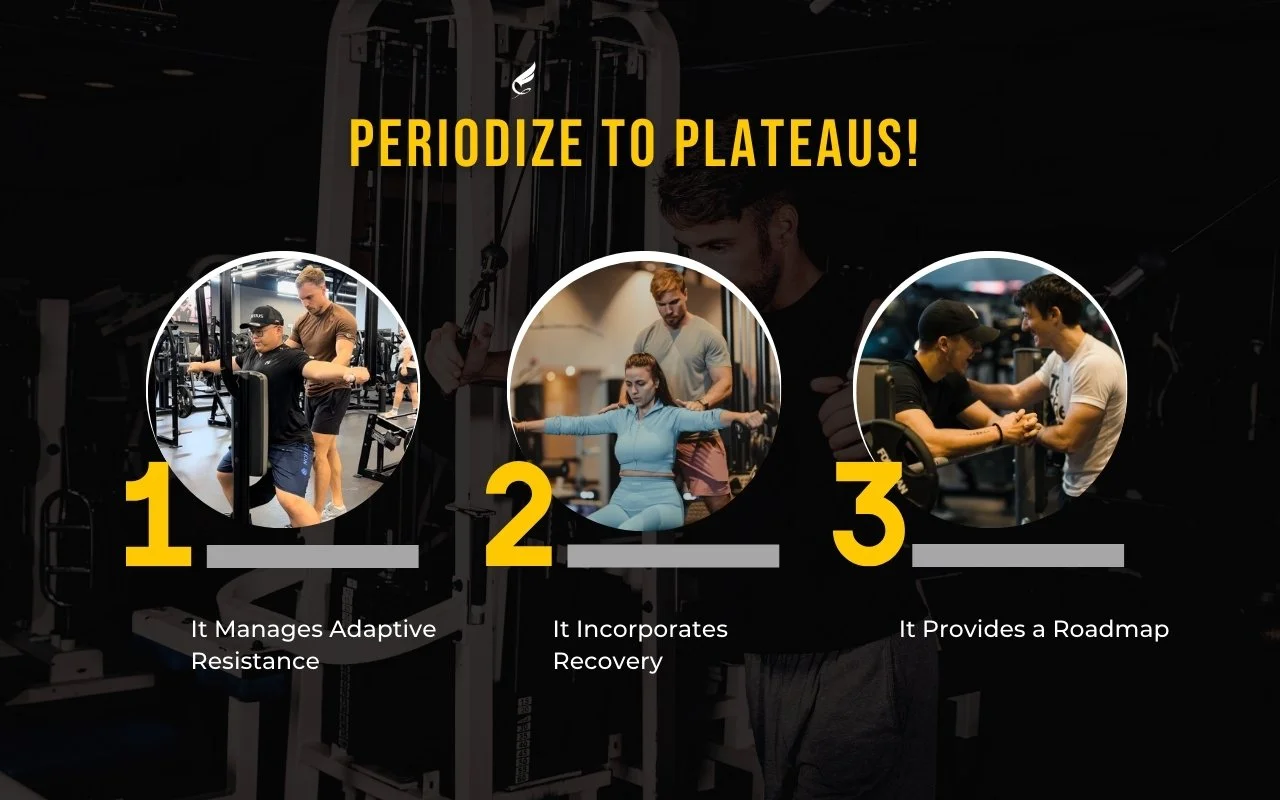
Why Periodization is the Key to Breaking Plateaus
A training plateau occurs when your body adapts to the stress you've been placing on it. To continue making improvement, you must apply the principle of progressive overload by introducing a new, different kind of stimulus. Periodization is the ultimate tool for this.
It Manages Adaptive Resistance: By systematically changing the challenge (from high volume to high intensity, for example), you prevent your body from ever fully adapting to one type of training.
It Incorporates Recovery: A well-designed periodized plan includes planned "deload" weeks, where you intentionally reduce volume and intensity. This allows your nervous system and joints to fully recover, ensuring you come back stronger for the next training block. Proper sleep and nutrition during this period are crucial.
It Provides a Roadmap: A plan gives you direction and purpose. Instead of guessing what to do each week, you have a clear roadmap that is guiding you towards your long-term goal, which is a powerful tool for maintaining motivation.

Conclusion: Stop Training Randomly, Start Training Intelligently
If you want to achieve consistent, long-term results and move past the frustration of training plateaus, you must move beyond random workouts. Periodization is the framework for intelligent, purposeful training. It's the difference between simply exercising and actively training for optimal performance.
By adopting a periodized approach, you are implementing a proven system that manages fatigue, maximizes adaptation, and ensures that every single session you perform is a deliberate step towards your ultimate goal.

Ready to Build Your Elite Training Program?
Understanding periodization is one thing; applying it to your own unique goals, schedule, and physiology is another. A generic template will never outperform a custom-built strategy. Let our expert coaches at Fortius Dubai design a periodized program that guarantees you break through your plateaus and achieve the results you've been working for.