The Corporate Burnout Belly: How High Stress Triggers Visceral Fat Storage

7 min read · Dubai-specific · 3-step protocol inside
Post Summary
If you are managing a demanding executive schedule, executing high-stakes decisions, and training consistently, yet still struggling with stubborn midsection fat, your primary bottleneck is hormonal, not behavioral. Chronic psychological stress elevates your baseline cortisol levels, initiating a biological shunt that preferentially deposits fat deep within your abdominal cavity. Discover the precise neuroendocrine pathways — including the HPA-axis and localised enzyme amplification — that lock abdominal fat in place, and implement our 3-step cellular reset protocol to flatten your midsection without crashing your energy.
The Silent Boardroom Saboteur
It is a silent frustration shared by corporate executives, fund managers, and founders across the DIFC, Downtown Dubai, and Jumeirah. You possess the operational discipline to build highly successful ventures, you track your macros, and you never miss a training session. Yet, despite your elite work ethic, your midsection retains a soft, prominent layer of fat that seems entirely immune to caloric deficits.
When you look in the mirror, this specific distribution of fat feels different. It isn't just a soft layer beneath the skin; it feels firm, deep, and highly resistant to standard fat-loss variables.
Your instinctual reaction is to push harder: cut your carbohydrate intake further, add gruelling early-morning cardio sessions, and power through your fatigue with premium espresso.
However, this aggressive strategy treats your body like a basic calculator, completely ignoring your underlying endocrine architecture. By forcing an already exhausted system into a deeper energetic crisis, you inadvertently amplify the exact hormonal signals causing the fat storage in the first place. You don't have a caloric problem; you have a cortisol problem.
Why Does Stress Cause Weight Gain? [The HPA-Axis Visceral Shunt]
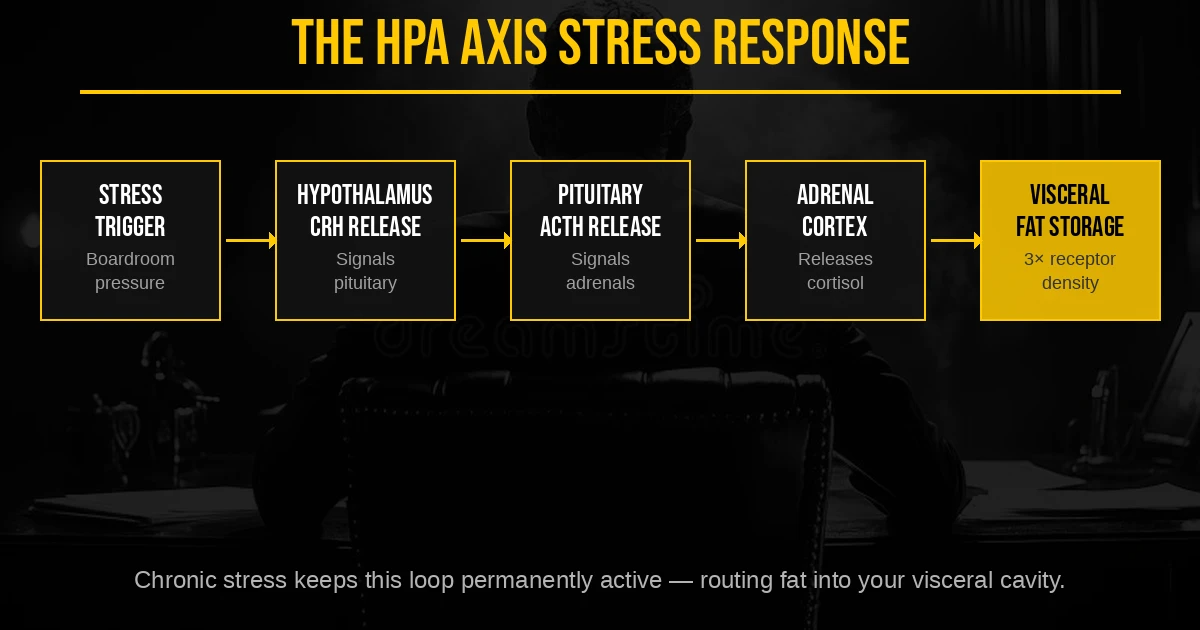
To understand why chronic professional stress changes where your body stores fat, we must analyse the Hypothalamic-Pituitary-Adrenal (HPA) axis.
When you encounter a high-stress event — whether it is a market downturn, a broken supply chain, or chronic sleep deprivation — your hypothalamus releases Corticotropin-Releasing Hormone (CRH). This triggers the pituitary gland to secrete Adrenocorticotropic Hormone (ACTH), which signals your adrenal cortex to pump cortisol into your bloodstream.
From an evolutionary standpoint, cortisol is a survival mechanism designed to mobilise immediate energy to fight or flee from an acute threat. It elevates blood glucose, suppresses non-essential immune functions, and sharpens focus. Once the threat passes, cortisol levels should return to baseline.
However, modern corporate stress never truly passes. In a state of chronic, low-grade psychological duress, your HPA axis remains constantly active. This sustained elevation of circulating cortisol changes your physical structure through a process known as the visceral shunt. Because the fat cells deep within your abdomen contain a significantly higher density of glucocorticoid receptors compared to subcutaneous fat cells anywhere else on your body, floating cortisol preferentially routes circulating triglycerides straight into your deep abdominal cavity. This creates the classic, hard, protruding cortisol belly.
Learn more with ourUltimate Guide to Sustainable Weight Loss
Can Cortisol Make You Gain Weight Without Eating More? [The 11β-HSD1 Enzyme]
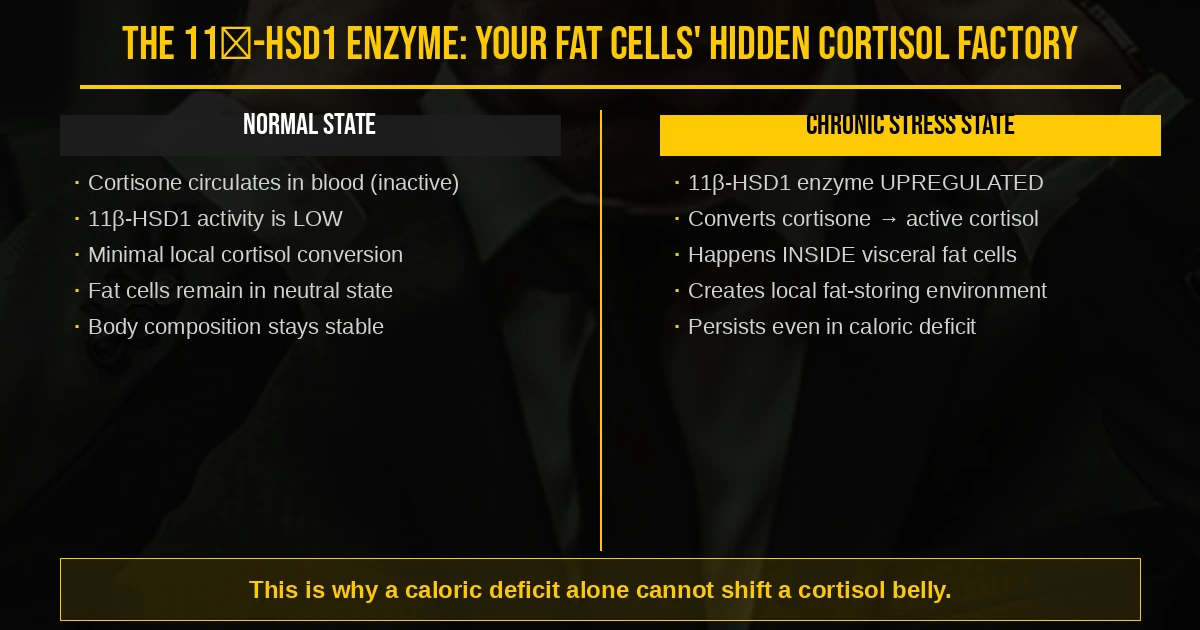
One of the most frustrating aspects of stress-induced weight gain is that it can occur even when your caloric intake remains completely static. The biochemical mechanism responsible for this is an enzyme embedded directly within your fat cells: 11-beta-hydroxysteroid dehydrogenase type 1 (11β-HSD1).
The primary function of the 11β-HSD1 enzyme is to convert inactive cortisone circulating in your blood into active, fat-storing cortisol locally within your adipose tissue.
When you experience chronic stress and sleep deprivation, your body drastically upregulates the production of this enzyme inside your visceral fat deposits. This creates a highly destructive localised feedback loop: Chronic Corporate Stress → Upregulation of 11β-HSD1 in Abdominal Fat cells → Local Conversion of Inactive Cortisone to Active Cortisol → Accelerated Visceral Fat Deposition (Even in a Caloric Deficit).
Because of this enzyme amplification, the fat tissue in your midsection can effectively create its own stress response internally, keeping you in a localised fat-storing state even if your systemic blood tests show near-normal cortisol levels during a standard morning blood draw.
How Stress Triggers Late-Night Cravings [The Neuropeptide Y Satiety Hack]
The hormonal damage of high cortisol isn't limited to passive fat shunting; it actively rewires your neurochemistry to compromise your executive willpower.
When your brain is chronically bathed in cortisol, it stimulates the intense synthesis and secretion of Neuropeptide Y (NPY) in the hypothalamus. NPY is an exceptionally potent neurotransmitter whose sole evolutionary purpose is to drive an undeniable, visceral craving for highly palatable, energy-dense foods — specifically combinations of refined carbohydrates, sodium, and fats.
This is why your discipline executes flawlessly during your structured morning operations, yet completely dissolves at 9:00 PM when you find yourself craving processed snacks or heavy comfort food. Your brain is experiencing a survival-driven chemical command to replenish its perceived energy reserves, bypassing your conscious logic entirely. To break this cycle, you must treat the neurochemical root cause rather than relying on sheer, exhausted willpower.
How to Lose Cortisol Belly Naturally [The Neuroendocrine Reset Protocol]
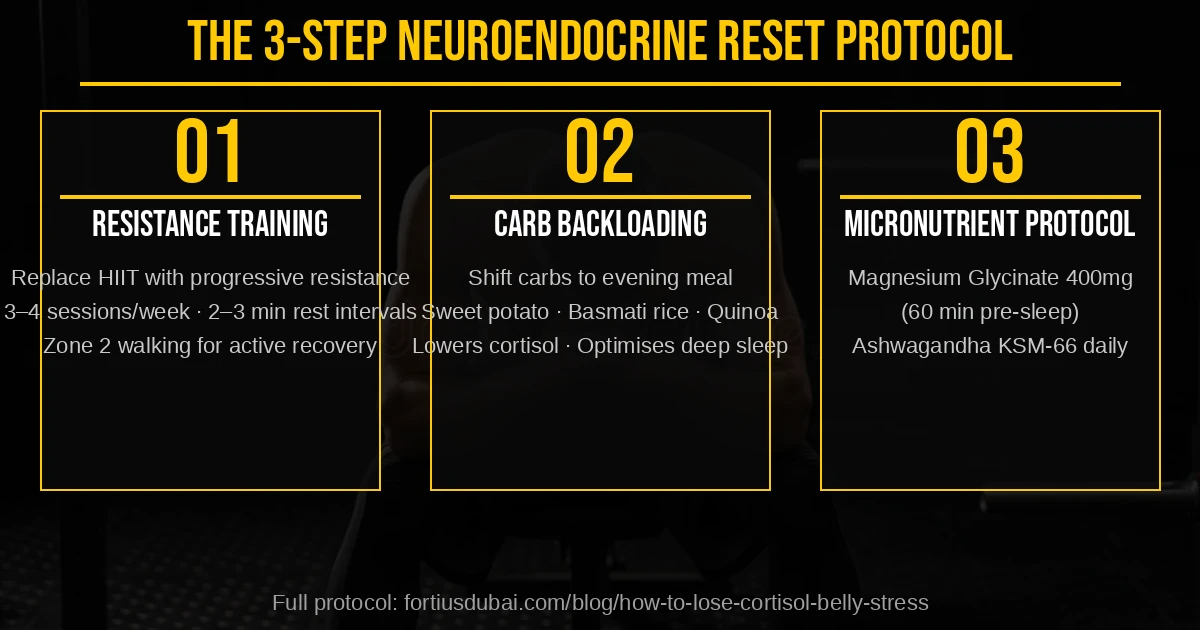
Reversing a stress-induced cortisol belly requires a complete shift in your training and lifestyle architecture. You cannot fight a biochemical fire with more physical stress.
Implement our three-step protocol to downregulate your HPA axis and restore metabolic flexibility:
Step 1: Replace High-Volume Glycolytic Cardio with Alactic Resistance Parameters
If your lifestyle is already driving high cortisol, adding gruelling, long-duration steady-state running or excessive HIIT acts as a severe biological stressor, elevating your baseline cortisol even higher.
Instead, anchor your training around structured, progressive resistance training with complete rest intervals (2 to 3 minutes between sets). This mechanical tension approach stimulates muscle protein synthesis and improves insulin sensitivity without forcing your adrenal glands into an extended, catabolic panic state. Supplement this with low-intensity Zone 2 walking to actively lower your systemic stress levels and enhance recovery.
Learn more about body recomposition with our blog: Skinny-Fat at 35: Why Eating Less is Keeping Your Body Soft.
Step 2: Strategic Carbohydrate Backloading to Optimise Sleep Architecture
Severely restricting your carbohydrates when your stress levels are maximised is a recipe for sleep failure. Carbohydrate consumption triggers the release of insulin, which naturally lowers your circulating cortisol levels by suppressing the HPA axis.
Shift the majority of your daily clean carbohydrate intake — such as sweet potatoes, basmati rice, or quinoa — to your final meal of the evening. This strategic backloading prompts a natural, controlled insulin response that lowers evening cortisol, facilitates the conversion of tryptophan into serotonin, and optimises your deep sleep architecture, helping you wake up with a lower fluid retention profile on Monday morning.
Step 3: Targeted Micronutrient Adaptation
When your system is chronically running hot, it rapidly depletes specific micronutrients required to regulate your central nervous system. Supplement your daily protocol with highly bioavailable forms of magnesium, specifically Magnesium Glycinate or Magnesium Malate (400mg taken 60 minutes prior to sleep), to calm neurological excitability.
Additionally, incorporate a high-grade, standardised adaptogen like Ashwagandha (KSM-66) to directly modulate your adrenal response and smooth out erratic daytime cortisol spikes.
Find out whether you need a post holiday metabolic reset and how to do it the right way with our Fortius Dubai Blog.
When the Diet Is Clean But the Belly Stays — Real Dubai Transformations
Rohan — Professional Trader & Family Office Manager
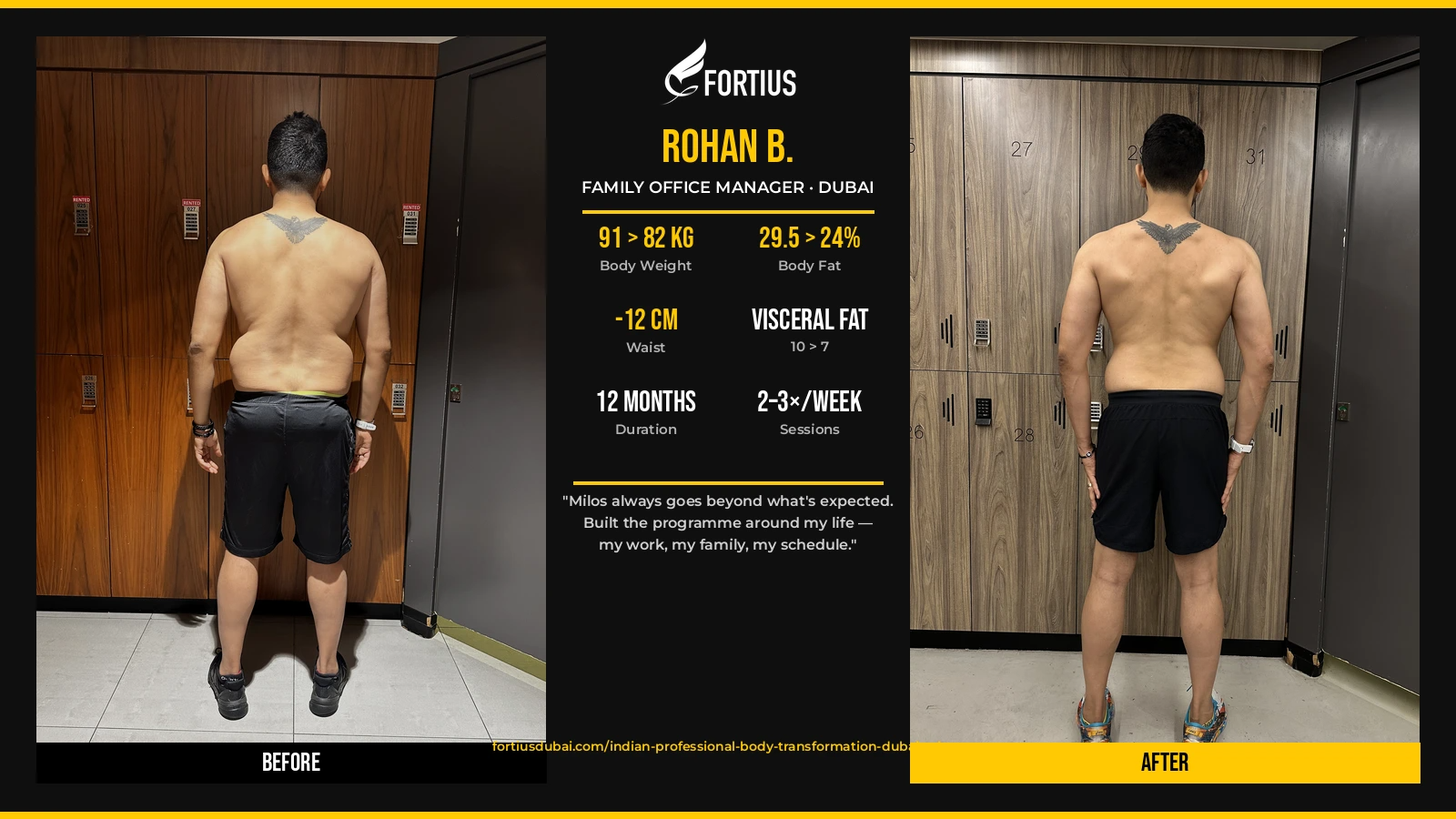
Rohan manages a family office and trades financial markets professionally — a role defined by chronic cognitive stress, screen time, and the kind of sustained cortisol output that routes fat directly into the visceral cavity regardless of how clean the diet is. His InBody scan told the story clearly: elevated body fat concentrated around the abdomen, low skeletal muscle mass, and a metabolism suppressed by years of high-pressure, low-movement professional life.
The solution was not another diet. It was addressing the physiological root cause — replacing cortisol-spiking HIIT with structured progressive resistance training, optimising protein intake to protect and rebuild lean muscle, and implementing strategic carbohydrate backloading to lower evening cortisol and improve sleep quality. The result: −9 kg of fat mass, body fat from 29% to 24%, and −12 cm off the waist — without a single crash diet.
If chronic stress is keeping your belly soft despite a clean diet, read Rohan's full transformation story.
Cristina — Mother Managing Hashimoto's Thyroiditis
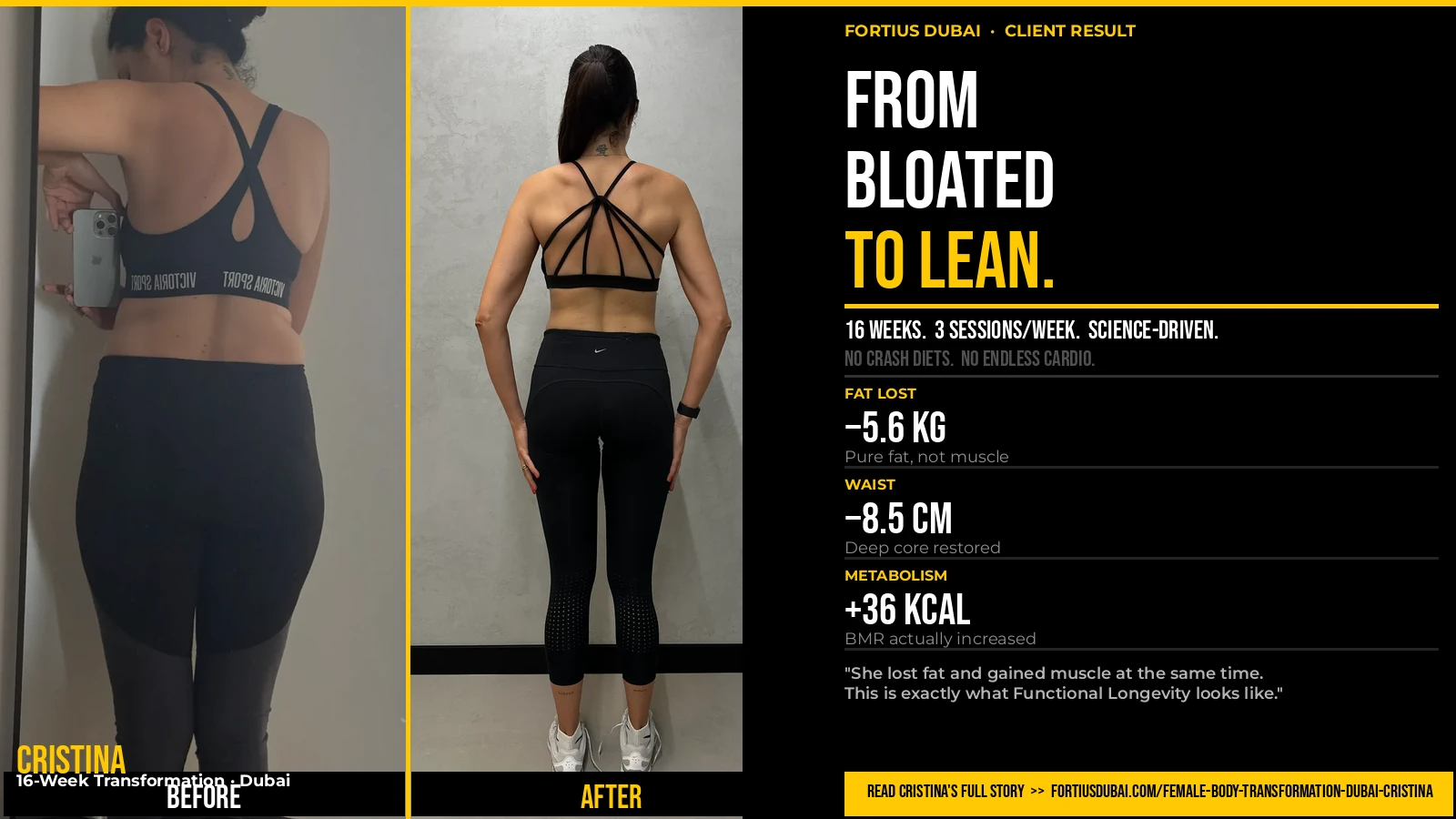
Cristina came to Fortius Dubai with a challenge that most generic fitness programmes are entirely unequipped to handle: Hashimoto's thyroiditis — an autoimmune condition in which the immune system attacks the thyroid gland, chronically suppressing T3 and T4 hormone production and creating a hormonal environment almost identical to the cortisol-belly pattern. Gluten sensitivity was a non-negotiable — even trace exposure triggers an inflammatory cascade that elevates cortisol, disrupts gut permeability, and stalls fat loss completely.
Her programme was built around a strict gluten-free nutrition protocol, anti-inflammatory food sequencing, and resistance training calibrated to stimulate lean muscle growth without spiking inflammatory markers. The result: −5.6 kg of pure fat mass, +3.1 kg of lean muscle, and −8.5 cm off the waist — with thyroid markers improving across the board.
For women managing autoimmune conditions and stubborn belly fat, readCristina's full transformation story.
FAQ Section - Your Questions Answered
What does a cortisol belly look like?
Unlike standard subcutaneous fat, which feels soft, pliable, and can be easily pinched beneath the skin, a cortisol belly is characterised by a firm, hard, and distinctly distended protrusion. Because the fat is stored deep beneath your abdominal wall surrounding your visceral organs, it pushes your abdominal muscles outward, creating a solid, round appearance.
How long does it take to reverse cortisol-induced fat storage?
With strict adherence to an HPA-axis reset protocol, initial drops in systemic fluid retention and abdominal bloating can be seen within 14 days, while significant reductions in deep visceral fat tissue typically materialise over 8 to 12 weeks of consistent lifestyle management.
Can caffeine cause you to hold onto abdominal fat?
Caffeine is a powerful central nervous system stimulant that naturally triggers the release of epinephrine and cortisol. For a well-rested individual, this response is transient and completely harmless. However, if you are chronically sleep-deprived and using high doses of caffeine to mask fatigue throughout the day, it keeps your adrenal glands locked in a continuous state of oversecretion, compounding visceral fat storage around your midsection.
Erasing a stubborn cortisol belly requires an approach that respects your unique biology and professional lifestyle. If you are ready to stop exhausting your body with generic fitness advice and implement an elite, science-backed lifestyle blueprint tailored specifically for busy executives, let's fix the strategy.
Click here to request your custom lifestyle blueprint and book a free strategy call →