The Science of the Post-Holiday "Metabolic Reset": Debunking the Myth & Returning to Physiological Realities

Every year following major holiday seasons, the global fitness and wellness markets flood consumers with marketing campaigns centered around the concept of a "metabolic reset." From detox teas and restrictive juice cleanses to complex supplement protocols sold across high-end hubs, these strategies share a common foundational narrative: that a brief period of caloric indulgence has fundamentally "broken" or "clogged" your metabolism, requiring a commercial, proprietary intervention to restore systemic efficiency.
From a bioenergetic and physiological perspective, this narrative is completely inaccurate. The human metabolic rate is not a mechanical filter that retains toxins, nor is it an engine that stalls permanently after a sudden surge in caloric influx. Instead, what commercial entities label as a "broken metabolism" is simply the natural, highly predictable manifestation of positive energy balance, temporary glycogen-induced fluid retention, and transient behavioral drift.
To achieve an authentic physiological restoration, we must look past commercial gimmicks and implement a structured return to core biological variables: sleep architecture optimization, progressive resistance training, precise daily physical activity targets, and data-driven protein thresholds.
Related Reading: To see how these biological variables fit into a complete, long-term body transformation framework, explore The Fortius Nutrition Blueprint.
The Bioenergetic Reality: What Actually Happens Post-Holiday?
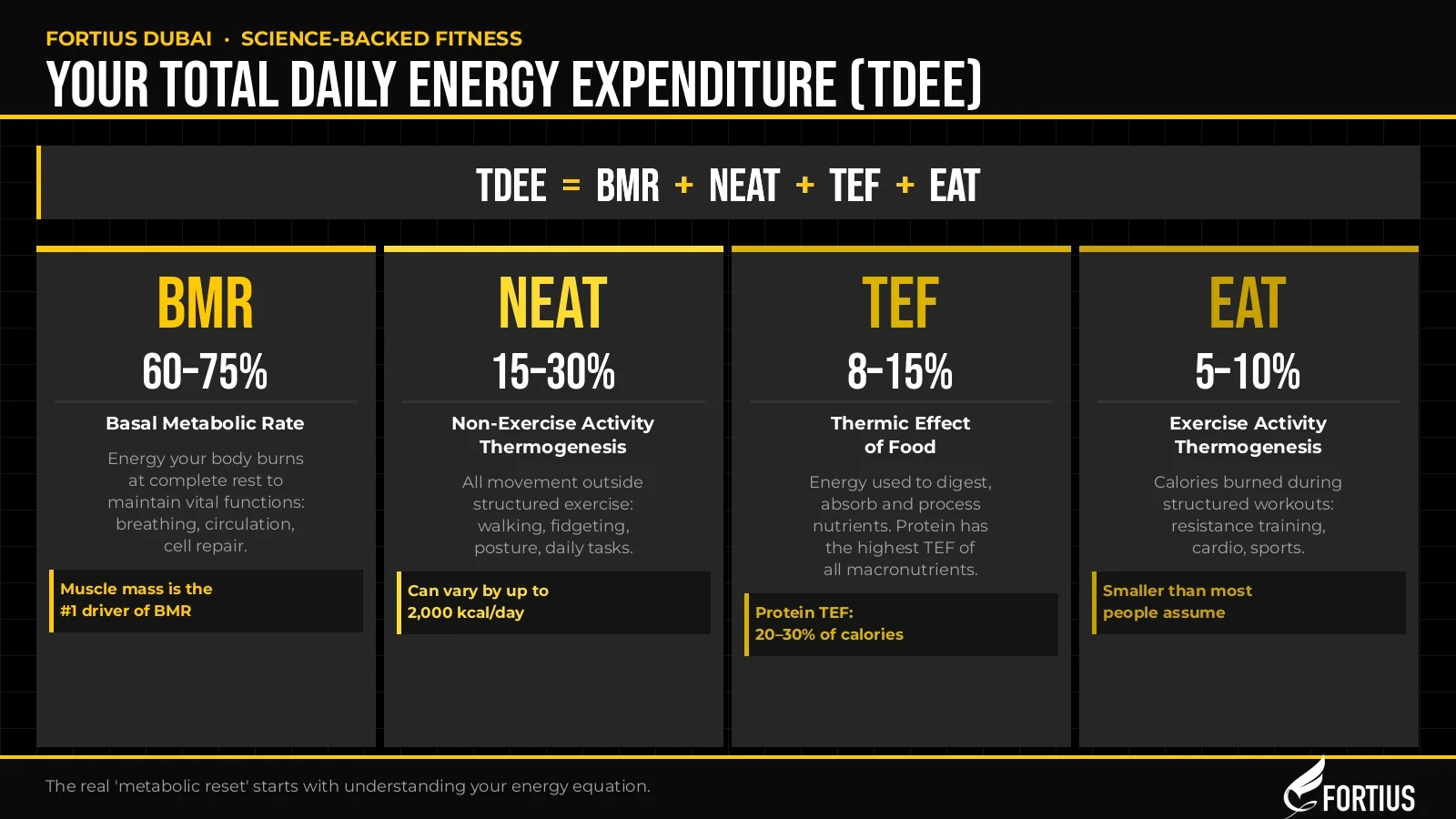
To systematically dismantle the "metabolic reset" marketing myth, we must analyze Total Daily Energy Expenditure (TDEE) through its exact scientific breakdown:
TDEE = BMR + NEAT + TEF + EAT
Where:
BMR (Basal Metabolic Rate): The energy required to maintain cellular homeostasis at rest.
NEAT (Non-Exercise Activity Thermogenesis): Spontaneous, non-structured physical movement.
TEF (Thermic Effect of Food): Energy expended during nutrient digestion and processing.
EAT (Exercise Activity Thermogenesis): Structured training sessions.
When an individual experiences sudden weight gain over a holiday, the change is almost entirely accounted for by two variables: sudden fluid shifts and adipose tissue accumulation. Every gram of exogenous carbohydrate stored as intramuscular and hepatic glycogen binds approximately 3 to 4 grams of water molecules. Consequently, a massive spike in sodium and carbohydrate consumption results in rapid, non-adipose cellular fluid accumulation, creating a visual illusion of rapid fat accumulation.
The Adaptive Thermogenesis Variable
A brief period of overeating actually forces an acute up-regulation—rather than a down-regulation—of your metabolic rate due to an increase in TEF and a spontaneous upward drift in NEAT. Your metabolism is not sluggish or broken; it is dealing with an acute energy surplus. The problem is behavioral momentum, not a damaged metabolic engine.
Pillar 1: Sleep Architecture and Neuroendocrine Metabolic Regulation

The true cornerstone of any systemic physiological reset begins with sleep hygiene. Holiday periods consistently disrupt standard circadian rhythms, resulting in sleep fragmentation and a severe contraction of deep (slow-wave) and REM sleep cycles. This disruption triggers profound endocrine imbalances that directly sabotage body composition goals.
The Leptin-Ghrelin Axis: Sleep restriction to fewer than six hours per night significantly down-regulates circulating serum leptin levels (the satiety hormone synthesized by adipocytes) while simultaneously up-regulating plasma ghrelin concentrations (the orexigenic peptide secreted by gastric cells). This hormonal shift creates a powerful homeostatic drive to consume hyper-palatable, calorically dense, high-sodium foods, making conscious dietary compliance incredibly difficult.
Cortisol Elevation and Insulin Sensitivity: Chronic sleep deprivation exacerbates the activation of the hypothalamic-pituitary-adrenal (HPA) axis, causing elevated systemic cortisol levels. Cortisol directly impairs insulin signaling pathways within skeletal muscle tissue by interfering with glucose transporter type 4 (GLUT4) translocation. This induces a temporary state of peripheral insulin resistance, increasing the propensity for nutrient partitioning toward adipose tissue rather than muscle tissue.
Actionable Fortius Sleep Protocol:
Circadian Anchoring: Establish a fixed waking time immediately, ensuring variance is kept under 30 minutes, even on weekends.
Lux Exposure: Expose eyes to at least 10,000 lux of natural light within 45 minutes of waking to optimize cortisol alignment.
Digital Isolation: Eliminate all short-wavelength blue light exposure (smartphones, tablets, screens) 90 minutes before bedtime to prevent the suppression of endogenous melatonin synthesis.
Pillar 2: Progressive Resistance Training and Fat-Free Mass Optimization
When individuals fall for the "metabolic reset" narrative, they frequently make the mistake of shifting entirely to exhaustive, low-intensity cardiovascular sessions or high-volume, random circuit classes designed to maximize acute caloric expenditure. This is a severe error that can compromise long-term metabolic health.
To sustainably increase or preserve your baseline metabolic rate, the primary focus must be the maintenance and optimization of Fat-Free Mass (FFM). Skeletal muscle tissue is highly metabolically active, accounting for a significant portion of resting energy expenditure. When a severe, sudden caloric deficit is combined with a lack of progressive loading, the body down-regulates skeletal muscle mass via the suppression of the mechanistic target of rapamycin complex 1 (mTORC1) pathway. This results in a drop in BMR, setting the client up for rapid weight regain later on.
Progressive mechanical tension, delivered through structured resistance training, acts as the primary stimulus to protect muscle mass during a fat loss phase. Heavy compound lifting preserves structural protein synthesis and maintains physical power output, ensuring that the mass lost during a fat loss phase comes from adipose tissue rather than functional skeletal muscle.
Find out how eating less is keeping your body soft in our blog: Skinny-Fat at 35
Actionable Fortius Training Protocol:
Frequency & Selection: Execute 3 to 5 structured resistance training sessions per week, prioritizing compound multi-joint movements (such as squats, presses, deadlifts, and rows).
Intensity Parameters: Ensure working sets are executed at an intensity of 2 to 0 Repetitions in Reserve (RIR) to maximize high-threshold motor unit recruitment.
Deep Dive: To understand the exact physiological mechanics of mapping out a sustainable caloric deficit without down-regulating your metabolism, read our full guide on The Science Behind Weight Loss.
Pillar 3: Maximizing NEAT Over Episodic Cardio
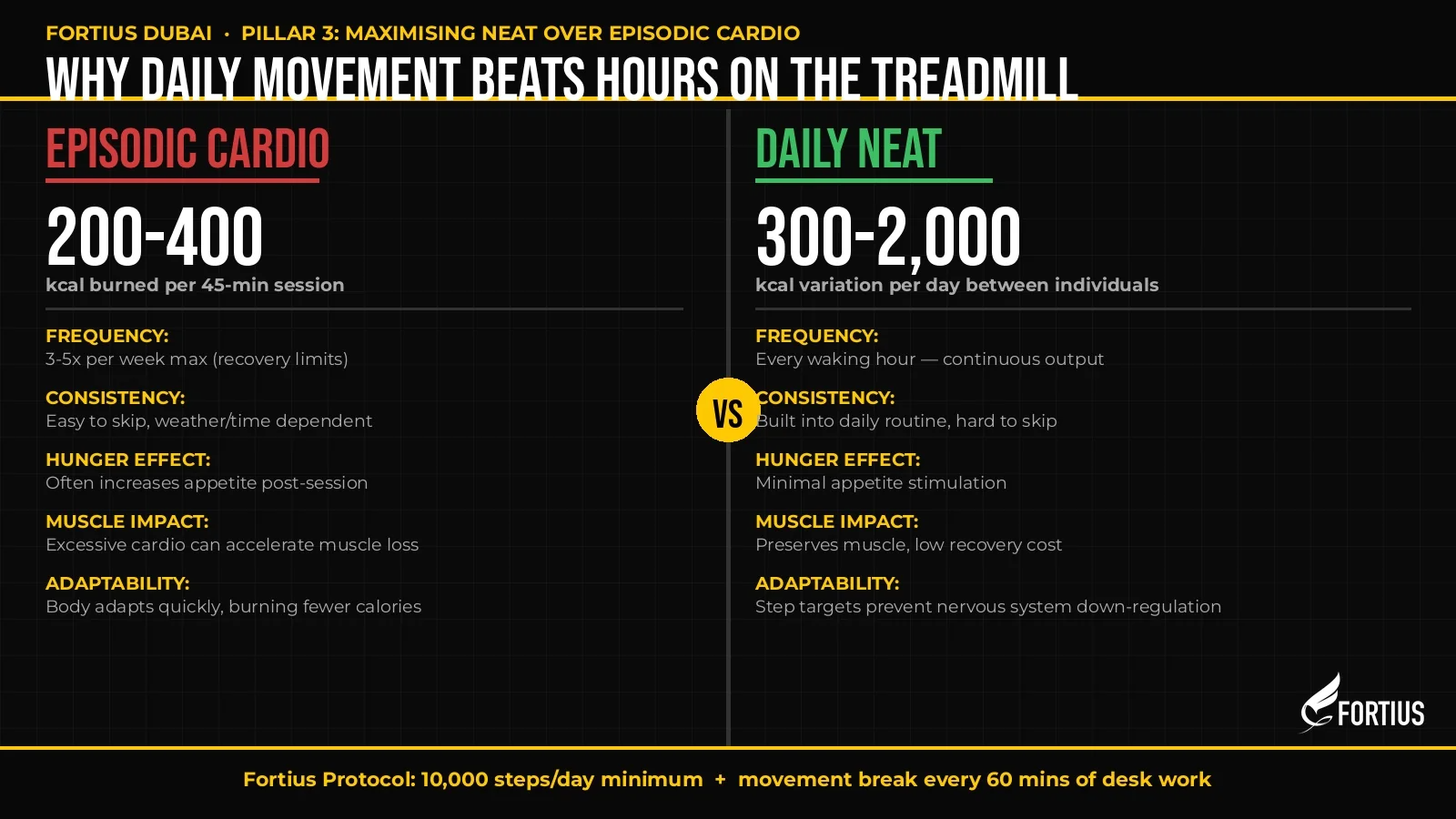
While structured workouts are highly effective for performance and muscle preservation, they contribute surprisingly little to the grand total of daily energy expenditure compared to Non-Exercise Activity Thermogenesis ($NEAT$). Holiday weight gain is rarely caused by missing a 45-minute gym session; it is driven by a massive reduction in daily baseline movement coupled with high caloric consumption.
When you enter a post-holiday caloric deficit, your body initiates a subconscious defensive mechanism known as adaptive behavioral down-regulation. To conserve energy, your nervous system naturally reduces spontaneous movements like fidgeting, pacing, and general physical activity. This subtle drop can reduce your daily energy expenditure by up to 500 calories without you realizing it, completely erasing a planned caloric deficit.
By establishing and hitting strict daily step targets, you strip your nervous system of its ability to down-regulate your daily activity level. This mechanical consistency keeps your baseline energy expenditure elevated, providing a highly predictable path to fat loss that doesn't require endless hours on a treadmill.
Actionable Fortius Activity Protocol:
Baseline Step Target: Mandate a strict floor of 10,000 steps per day, tracked via an objective wearable sensor.
Intermittent Movement Breaks: For every 60 minutes of sedentary desk work, complete 5 minutes of continuous walking to counteract metabolic stagnation.
Dubai Summer Strategy: Spontaneous daily movement shifts dramatically when the temperature climbs. Learn how to protect your fat loss targets indoors with our strategic protocol for the Dubai Summer NEAT Collapse.
Pillar 4: The Protein Leverage Hypothesis and Thermic Efficiency
The final and perhaps most powerful physiological lever to pull is the strategic optimization of daily protein intake. Post-holiday recovery strategies frequently emphasize severe restriction or liquid fasts, both of which completely lack essential amino acids. This lack of dietary protein accelerates muscle loss and triggers severe, hard-to-control hunger signals.
According to the Protein Leverage Hypothesis, the human appetite regulation system continuously monitors internal amino acid availability. If dietary protein intake is insufficient, the brain maintains a heightened appetite signal, driving individuals to consume food until their absolute amino acid requirements are met. By prioritizing protein density early in a fat loss phase, you satisfy this target quickly, reducing cravings and stabilizing hunger signaling pathways.
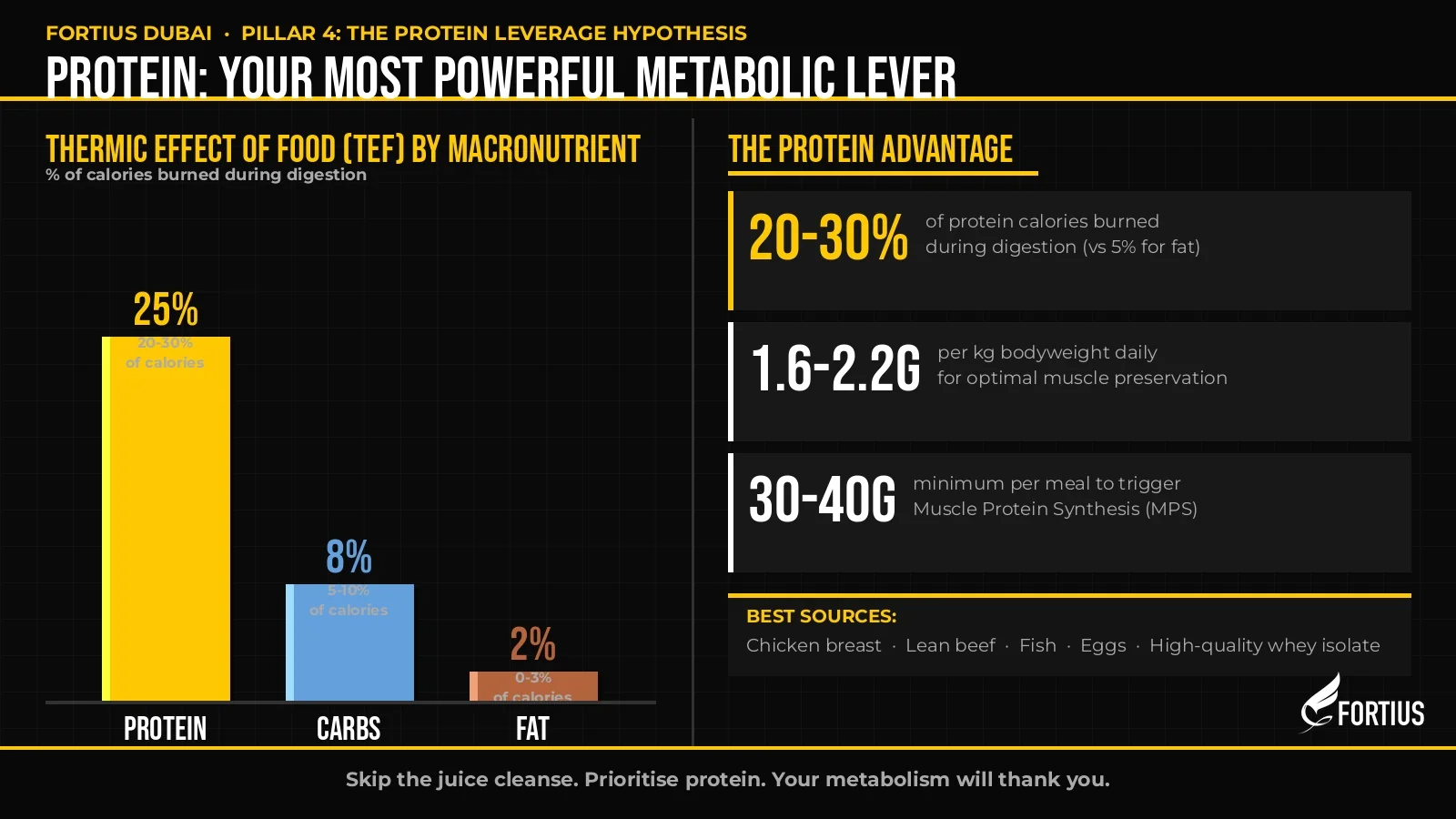
Furthermore, protein possesses a massive metabolic advantage due to the Thermic Effect of Food ($TEF$). While carbohydrates and lipids require only about 5% to 15% of their total energy value to be broken down and absorbed, dietary protein requires approximately 20% to 30% of its total caloric value just to be processed by the liver and gut. This means that a substantial fraction of the energy consumed from protein is immediately dissipated as heat energy, natively boosting your daily metabolic output.
Actionable Fortius Nutritional Protocol:
Target Intake: Consume 1.6 to 2.2 grams of high-quality protein per kilogram of total body weight daily, adjusted for overall body composition.
Distribution & Source Selection: Divide total intake evenly across 3 to 5 meals, ensuring each meal contains at least 30–40 grams of protein rich in leucine to continuously stimulate Muscle Protein Synthesis (MPS). Rely on whole, minimally processed sources like chicken breast, lean beef, fish, and high-quality whey isolate.
The Real Post-Holiday Reset
The concept of an overnight "metabolic reset" achieved through commercial products is a complete marketing illusion. Your metabolism does not need a reset; it simply requires a return to predictable biological conditions. True body transformations are built on scientific constants: optimizing sleep architecture, lifting weights progressively, protecting daily movement levels, and prioritizing protein intake. Skip the commercial trends, bypass the detox protocols, and return to real, measurable physiology with Fortius Dubai.
Find out why you might be gaining weight every weekend in our blog: The Dubai Weekend Sabotage: How 48 Hours Erases 5 Days of Hard Work.