The Psychology of Weight Loss After 40: Overcoming Emotional Eating and Hormonal Cravings
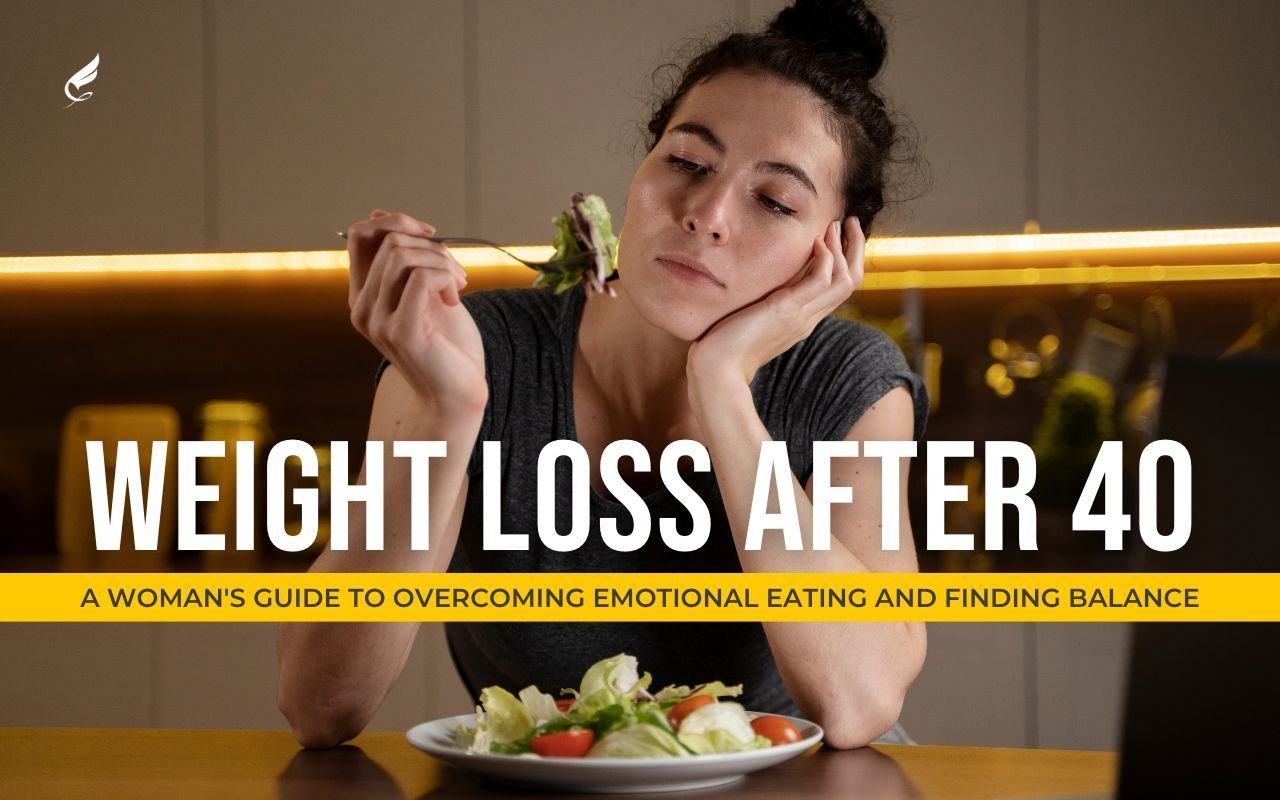
For the professional woman in Dubai, weight loss after 40 often feels less like a calorie problem and more like a stress-management challenge. As perimenopause shifts our hormonal landscape, the 'willpower' we rely on in the boardroom often vanishes at the dinner table. This isn't a lack of discipline; it’s a biological response to rising cortisol and declining estrogen. This guide, developed by Milos Tanasic and the Fortius Dubai team, explores the Psychology of Weight Loss, moving beyond restrictive dieting to address the emotional triggers and hormonal cues that drive stress eating.

The Cortisol-Crave Cycle: Beyond the Emotional Rollercoaster
If you feel like you are on an emotional rollercoaster, it is because your biochemistry has shifted. For women over 40, the transition into perimenopause isn't just a life milestone—it is a physiological upheaval.
As estrogen levels decline, your body becomes significantly more sensitive to Cortisol (the stress hormone). When life in Dubai gets demanding—whether it's back-to-back meetings in DIFC or managing family schedules—your brain senses this cortisol spike and triggers a survival mechanism: a craving for high-dopamine, high-calorie "comfort" foods.
While mindset is critical, if your hormonal shifts are causing extreme physical symptoms, it is worth exploring medical support. Read our Complete Guide to Menopause & HRT to see how hormonal optimization can settle your cravings at the source.
Breaking the Vicious Cycle of Guilt
This "solace" in food is temporary, but the biological aftermath is not. Emotional eating leads to a spike in blood sugar followed by an insulin crash, which triggers further cravings and feelings of lethargy. This creates a cycle of:
Weight Fluctuations: Driven by inflammation and water retention.
The Shame Spiral: Feeling like a "failure" when your biology was simply driving the bus.
Metabolic Resistance: Making it even harder to see results from your next workout.
At Fortius Dubai, we don't just tell you to "stop eating." We teach you how to stabilize your hormonal environment so that these cravings lose their power.

Behavioral Architecture: Identifying Your Emotional Eating Triggers
Breaking the cycle of stress-eating requires more than just awareness; it requires a tactical plan. The first step is identifying your unique Trigger-Response Loop. For most women over 40, these triggers fall into three categories:
The 'Decision Fatigue' Trigger: After a day of making high-stakes decisions at work, your brain’s prefrontal cortex (the part responsible for willpower) is exhausted. This is why you crave sugar at 6:00 PM.
The 'Hormonal Hunger' Trigger: During perimenopause, drops in progesterone can lead to increased anxiety and a physical "emptiness" that feels like hunger but is actually a search for a dopamine hit.
The 'Environmental' Trigger: Walking into your kitchen after a stressful commute or sitting on the sofa after the kids are in bed—your brain has "wired" these environments for eating.
Moving Beyond 'Willpower': Tactical Coping Mechanisms
Instead of relying on willpower—which is a finite resource—we use Pattern Interrupters. At Fortius Dubai, we teach our clients to replace the "cookie jar" response with high-impact dopamine alternatives:
The 5-Minute Temperature Shift: If you feel an emotional craving, splash cold water on your face or step into a different room. This triggers the "Dive Reflex," which naturally lowers your heart rate and breaks the cortisol spike.
The Dopamine Swap: Instead of sugar, engage in a 2-minute "Power Set" (like air squats or a plank). This releases natural endorphins and resets your insulin sensitivity.
The 'HALT' Audit: Before you eat, ask: Am I Hungry, Anxious, Lonely, or Tired? If it’s any of the last three, food will not fix the problem—it will only add a layer of guilt.

The Science of Satiety: Why Mindful Eating is a Metabolic Hack
For women over 40, mindful eating is more than a wellness trend; it is a physiological tool to reset your hunger hormones. As we age, the communication between our gut and our brain—specifically the hormones Leptin (the fullness signal) and Ghrelin (the hunger signal)—can become "muffled" by chronic stress and fast-paced living.
Re-Training Your 'Fullness' Sensors
When you eat while distracted (checking emails, driving, or standing in the kitchen), your brain fails to register the volume of food consumed. By the time you feel "full," you have likely over-consumed by 20–30%.
At Fortius Dubai, we teach a high-performance version of mindfulness called Nutritional Awareness:
The 20-Minute Signal: It takes approximately 20 minutes for your stomach to send a hormonal signal to your brain that you are satiated. Slowing down isn't just about manners; it's about allowing your biochemistry to catch up with your fork.
Sensory Engagement: By removing digital distractions, you engage your parasympathetic nervous system (the 'Rest and Digest' mode). This lowers cortisol and improves how your body partitions the nutrients you're eating.
Volume Over Voids: Instead of relying on food for emotional comfort, mindful eating allows you to choose high-volume, nutrient-dense foods that physically stretch the stomach lining, triggering a natural "stop" signal.
Pro Tip: A psychological reset works best when paired with the right physical stimulus. Building lean muscle is the most effective way to stabilize your blood sugar and increase your metabolic rate—check out our Strength Training for Women Over 40 guide to see the exact lifting protocols we use at Fortius.

Beyond the Scale: Building a Body Based on Performance
In the high-pressure environment of Dubai, it is easy to fall into the trap of using the scale as the sole arbiter of your success. However, for women over 40, the scale is often a "liar." Because of shifts in water retention, inflammation, and muscle gain during a transformation, your weight can fluctuate while your body composition is actually improving.
At Fortius Dubai, we advocate for a shift in perspective: moving from aesthetics to performance-based self-worth.
Tracking 'Non-Scale Victories' (NSVs)
Instead of focusing on "society’s pressure," focus on the objective resilience of your physical vessel. We encourage our clients to track:
Functional Strength: Are you lifting heavier, moving better, and recovering faster?
Bio-Feedback: How is your sleep quality, energy consistency, and digestive health?
Metabolic Health: Are your clothes fitting differently, even if the scale hasn't moved?
By celebrating what your body can do—its strength, its resilience, and its ability to adapt—you naturally cultivate a positive body image. You stop viewing your body as an object to be judged and start viewing it as a high-performance machine that requires elite fuel and strategic recovery.
Weight loss is a metric, but Body Recomposition is the goal. Learn the science of losing fat while gaining muscle after 40 to understand why your clothes might fit better even if the scale hasn't moved.

The Fortius Blueprint: Systemic Recovery & Sustainable Transformation
For the modern woman over 40, weight loss is no longer about "eating less and moving more." It is about managing the Metabolic Cost of Stress. Chronic stress keeps your body in a "sympathetic" state (fight-or-flight), where it actively resists fat loss and breaks down muscle tissue for quick energy.
Moving from Self-Care to 'Systemic Recovery'
In a high-pressure city like Dubai, "self-care" is often seen as a luxury. At Fortius Dubai, we view it as a metabolic requirement. To break the emotional eating loop, you must lower your systemic cortisol:
The Sleep-Metabolism Connection: Prioritize 7–8 hours of quality sleep to regulate the hormones that control your appetite.
Tactical Exercise: Shift from high-stress "chronic cardio" to Progressive Strength Training. This builds the metabolic engine (muscle) that allows for more flexible eating without weight gain.
Nature & Grounding: Utilizing Dubai’s outdoor spaces for low-intensity movement (NEAT) helps reset your nervous system and reduces the urge to "decompress" with food.
Architecture, Not Perfection
Success after 40 is a journey of Architecture, not just willpower. It’s about building a lifestyle that supports your unique hormonal profile. This includes:
Whole-Food Foundations: Prioritizing high-protein (1.7–2.2g/kg) and fiber-rich nutrients to maintain satiety.
Struggling to hit your protein targets while managing a busy Dubai schedule? Our Healthy Eating Guide for Women Over 40 provides a practical handbook for nourishing your body on the go
Community & Coaching: Having an expert to help you navigate the "plateaus" that are a natural part of any body transformation.
Are You Ready to Rewrite Your Story?
Transformation after 40 is about reclaiming your health, your strength, and your mental clarity. If you are ready to move beyond emotional eating and build a body that feels as strong as it looks, we are here to guide you.

To find out more about our services, check out:

Check out our science-based blog to learn more about all things training and nutrition:
#StayStrong
#BeFortius