The GLP-1 Muscle Protocol: How to Train & Eat on Ozempic, Mounjaro, and Retatrutide

In 2026, the landscape of weight management in Dubai has changed forever.
We have seen a massive influx of clients coming to Fortius while taking weight loss medications like Ozempic (Semaglutide) and Mounjaro (Tirzepatide). More recently, the arrival of Retatrutide—the "triple G" agonist—has accelerated results even further.
(Curious about the differences? Read our breakdown of the Mounjaro vs. Ozempic Comparison and our deep dive into Retatrutide in Dubai).
These weight loss drugs are powerful tools. They function as GLP-1 receptor agonists, mimicking the hormone that regulates appetite and glucose dependent insulin secretion. The result is often significant weight loss achieved in a short period.
However, clinical data shows a concerning trend: without a structured exercise program, a significant portion of the weight lost is actually lean body mass, not just fat.
This leads to a condition known as sarcopenia or "Skinny Fat." You fit into smaller clothes, but you feel weak, your metabolic health crashes, and you risk functional decline.
At Fortius Dubai, we specialize in The GLP-1 Muscle Protocol—a strategy designed to preserve muscle mass while the medication handles the fat.

The Physiology of the "Medical Cut"
When you are on these medications, gastric emptying slows down, and hunger signals are muted. You naturally consume fewer calories.
If you simply reduce your food intake without a plan, you risk starving your muscle tissue. Rapid weight loss of more than 1–2 pounds per week increases the likelihood of muscle loss because the body, sensing a famine, breaks down muscle for energy.
The goal of our protocol is to shift the body's focus to maximize fat loss while maintaining muscle health. To do this, we must counteract the catabolic (breakdown) environment with strong anabolic (growth) signals.
Pillar 1: The "Anti-Atrophy" Training Style
Many users assume that because they are losing weight, they should do more cardio. This is a mistake.
Aerobic exercise has cardiovascular benefits, but it is not the primary tool for muscle preservation. If you are taking pharmacologic weight loss treatments, your gym time must be dedicated to strength training.

1. Prioritize Resistance Training
Resistance training is crucial for preserving lean mass during weight loss when using GLP-1 medications.
Frequency: Resistance training should be performed 2–3 times per week for 30–60 minutes. This is the "minimum effective dose" to signal your body to hold onto muscle.
Focus: Use compound movements or resistance bands to stimulate multiple muscle groups.
Intensity: You must lift heavy enough to challenge the muscle. Combining GLP-1 receptor agonists with exercise may yield additive or synergistic effects, improving both body composition and insulin sensitivity.
Learn more about muscle building and preservation with our Ultimate Guide to Muscle Building.

2. Limit Excessive Cardio
While regular exercise is vital for cardiovascular health, excessive cardio combined with a low calorie intake can accelerate muscle loss. Focus on walking or light activity to support weight reduction without stressing the body's recovery systems.
(New to lifting? Check out our guide on Strength Training vs. The Ozempic Myth).
Pillar 2: Nutrition When You Have No Appetite
The biggest challenge our clients on Mounjaro or Retatrutide face is that the medication works too well—they have zero desire to eat.
However, clinical nutrition dictates that you cannot rely on hunger cues. You must treat your diet like a prescription.
1. The Protein Anchor
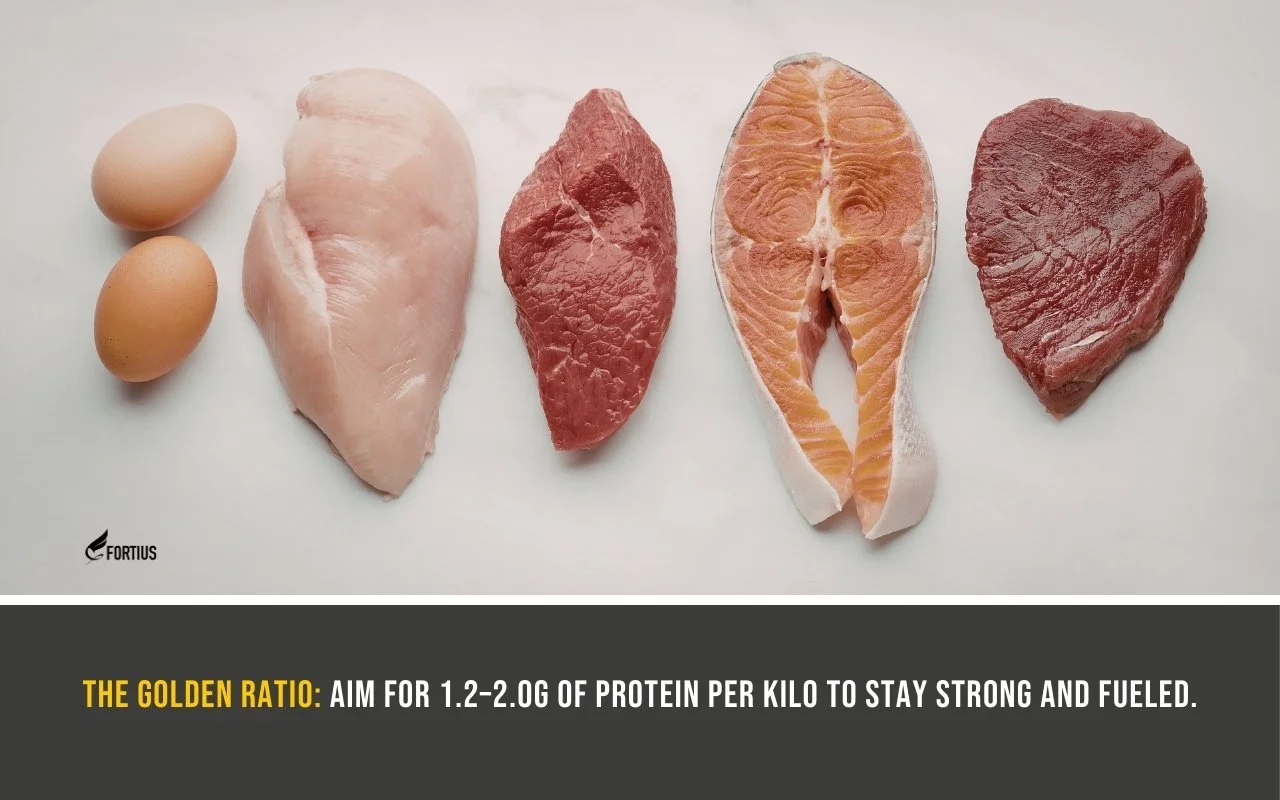
Adequate protein intake of 1.2 to 2.0 grams of protein per kilogram of body weight daily is critical to stimulate muscle protein synthesis.
The Strategy: Users should prioritize 20–30 grams of high-quality protein per meal to counteract appetite suppression.
Sources: Focus on lean protein like chicken, fish, and egg whites. If you struggle with solid food, protein rich foods like Greek yogurt or a high-quality whey isolate shake are essential.
Why it matters: Increasing protein intake is important for GLP-1 users to maintain muscle mass. Without enough protein, your body will cannibalize its own tissue.
2. Hydration & Gut Health
Hydration is crucial for GLP-1 users to help manage gastrointestinal side effects like nausea and constipation.
Target: Aim for 2–3 liters of water daily, as muscle tissue consists largely of water.
Digestion: Since the drug slows digestion, focus on whole grains, brown rice, and fibrous vegetables to support gut health. However, avoid fried foods, sugary foods, and ultra processed foods as these can worsen nausea and offer zero nutritional value.

3. Healthy Fats
Do not cut fats completely. Healthy fats from avocados, nuts, and olive oil are essential for hormonal balance. Avoid unhealthy fats and saturated fat found in fast food.

Pillar 3: Lifestyle & Long-Term Success
The medication is a temporary tool; your habits are the permanent solution.
1. Managing Plateaus
Weight loss plateaus are common when using GLP-1 medications. As your body weight drops, your metabolism adapts. Tracking food intake can help identify dietary adjustments needed to overcome weight loss plateaus.often, a plateau is a sign you need to increase your physical activity or adjust your meal plan, not just increase your dosage.
2. Preventing Weight Regain
Structured physical activity, particularly resistance training, can mitigate the effects of GLP-1 therapy on muscle loss and optimize long-term metabolic outcomes. Building muscle now acts as an insurance policy against weight regain later. Muscle tissue is metabolically active—the more you have, the easier it is to maintain your new weight after you stop the medication.
3. Medical Supervision
It is crucial to work with a registered dietitian or a coach who understands sports medicine. Monitoring body composition using methods like DEXA scans helps ensure that weight lost is primarily fat, not muscle.
Common Questions from GLP-1 Users
-
Patients on GLP-1 therapy are at greater risk for sarcopenia and functional decline without exercise. You may lose weight, but you risk developing frailty and poor bone density later in life.
-
Yes. Intermittent fasting may enhance fat loss while using GLP-1 medications by improving metabolic flexibility. However, ensure your eating window is long enough to hit your protein targets.
-
Retatrutide causes even faster weight loss than Ozempic. Extremely rapid weight loss increases the likelihood of muscle loss, meaning your training protocol must be even stricter on this medication.
The Bottom Line
These medications are tools, not solutions. They open the door to transformation, but you have to walk through it.

Need proof? Look at our client Rusana. She didn't just take medication and hope for the best; she combined her medical protocol with our heavy resistance training and high-protein strategy. The result? She lost 30kg of fat while reshaping her entire physique—not just shrinking it. You can see her incredible before-and-after photos and read her full journey in our 30kg Weight Loss Case Study.
The GLP-1 muscle protocol is designed to prevent the loss of lean muscle mass while taking GLP-1 receptor agonists. If you rely solely on the injection, you might end up lighter, but you won't end up looking like you want.
Combining GLP-1 therapy with structured lifestyle changes can enhance overall outcomes. At Fortius Dubai, we provide the personalized approach you need to navigate this journey safely.
Taking medication? Let's safeguard your muscle. Book your consultation with our body transformation experts today.